Wheat Crop Complete Notes 2026 for Agriculture Exams
गेहूँ (Wheat) फसल सम्पूर्ण नोट्स 2026 – कृषि परीक्षाओं के लिए
Introduction of Wheat
गेहूँ का परिचय
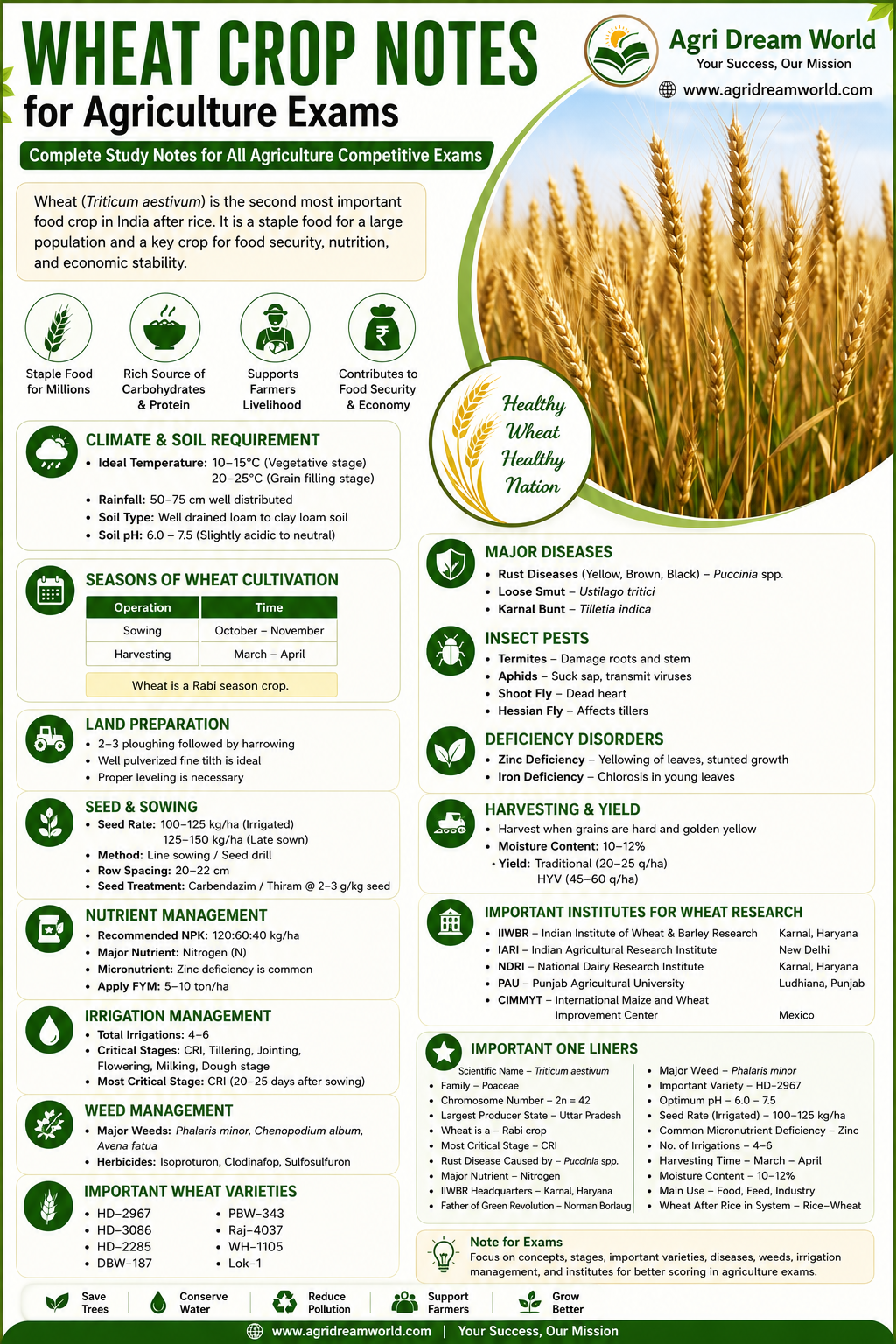
Wheat is one of the most important cereal crops of the world. It is the staple food for millions of people and a major source of carbohydrates and protein. In India, wheat is the second most important food crop after rice.
गेहूँ विश्व की सबसे महत्वपूर्ण अनाज फसलों में से एक है। यह करोड़ों लोगों का मुख्य भोजन है तथा कार्बोहाइड्रेट एवं प्रोटीन का प्रमुख स्रोत है। भारत में धान के बाद गेहूँ दूसरी सबसे महत्वपूर्ण खाद्यान्न फसल है।
Wheat Crop Notes 2026 Introduction
Wheat Crop Notes 2026 Climate and Soil
Wheat Crop Notes 2026 Important Varieties
Wheat Crop Notes 2026 Irrigation Management
Wheat Crop Notes 2026 Fertilizer Management
Wheat Crop Notes 2026 Diseases and Pest Management
Wheat Crop Notes 2026 Research Institutes
Wheat Crop Notes 2026 Important One Liner Questions
Scientific Classification
वैज्ञानिक वर्गीकरण
| Particular | Details |
|---|---|
| Scientific Name | Triticum aestivum |
| Family | Poaceae / Gramineae |
| Chromosome Number | 2n = 42 |
| Origin | South-West Asia |
Importance of Wheat
गेहूँ का महत्व
- Major food grain crop
- Rich source of carbohydrates and protein
- Used for bread, chapati, biscuits, pasta, bakery products
- Wheat straw is used as animal feed
- Important contributor to food security
गेहूँ भारत की खाद्य सुरक्षा का प्रमुख आधार है। इससे आटा, ब्रेड, बिस्कुट एवं अन्य खाद्य पदार्थ बनाए जाते हैं।
Major Wheat Producing Countries
प्रमुख गेहूँ उत्पादक देश
Top Wheat Producing Countries:
- China
- India
- Russia
- USA
- France
Largest Wheat Producing State in India:
- Uttar Pradesh
Major Wheat Producing States:
- Uttar Pradesh
- Punjab
- Haryana
- Madhya Pradesh
- Rajasthan
- Bihar
Climate Requirement
जलवायु
Wheat is a cool season crop.
गेहूँ शीत ऋतु की फसल है।
| Stage | Temperature |
|---|---|
| Germination | 20–25°C |
| Vegetative Growth | 10–15°C |
| Grain Filling | 20–25°C |
Rainfall Requirement:
- 50–75 cm rainfall is ideal.
Harmful Conditions:
- High temperature during grain filling reduces yield.
Soil Requirement
मिट्टी
Wheat grows best in fertile loamy soils.
Ideal Soil:
- Well-drained loam soil
- Clay loam soil
- Soil pH: 6.0–7.5
Avoid:
- Waterlogged soils
Seasons of Wheat Cultivation
गेहूँ की खेती का समय
| Operation | Time |
|---|---|
| Sowing | October–November |
| Harvesting | March–April |
Late Sowing:
- December sowing is considered late.
Types of Wheat
गेहूँ के प्रकार
1. Bread Wheat
- Triticum aestivum
2. Durum Wheat
- Used for pasta
3. Emmer Wheat
- Traditional type
Important Wheat Research Institutes
गेहूँ से संबंधित महत्वपूर्ण संस्थान
1. IIWBR
Full Form:
Indian Institute of Wheat and Barley Research
Location:
Karnal, Haryana
Importance:
Major wheat research institute in India.
2. IARI
Full Form:
Indian Agricultural Research Institute
Location:
New Delhi
Famous For:
Development of improved wheat varieties.
3. CIMMYT
Full Form:
International Maize and Wheat Improvement Center
Location:
Mexico
Importance:
Global wheat improvement research.
Green Revolution and Wheat
हरित क्रांति एवं गेहूँ
Semi-dwarf wheat varieties increased wheat production tremendously.
Important Scientist:
Norman Borlaug
Indian Scientist:
M. S. Swaminathan
Important Varieties:
- Kalyan Sona
- Sonalika
Land Preparation
खेत की तैयारी
- 2–3 ploughings
- Fine tilth is necessary
- Proper leveling required
Seed and Sowing
बीज एवं बुवाई
Seed Rate:
| Condition | Seed Rate |
|---|---|
| Irrigated | 100–125 kg/ha |
| Late Sown | 125–150 kg/ha |
Sowing Methods:
- Broadcasting
- Line sowing
- Seed drill method
Spacing:
- 20–22 cm row spacing
Seed Treatment
बीज उपचार
Common Chemicals:
- Carbendazim
- Thiram
- Trichoderma
Benefits:
- Disease protection
- Better germination
Fertilizer Management
उर्वरक प्रबंधन
Recommended NPK Dose:
- 120:60:40 kg/ha (varies regionally)
Major Nutrient:
- Nitrogen
Micronutrient:
- Zinc deficiency common in alkaline soils.
Irrigation Management
सिंचाई प्रबंधन
Wheat requires 4–6 irrigations.
Critical Stages:
- Crown Root Initiation (CRI)
- Tillering
- Jointing
- Flowering
- Milking
- Dough stage
Most Critical Stage:
CRI Stage
Occurs 20–25 days after sowing.
Weed Management
खरपतवार नियंत्रण
Major Weeds:
- Phalaris minor
- Chenopodium album
- Avena fatua
Herbicides:
- Isoproturon
- Clodinafop
- Sulfosulfuron
Important Wheat Varieties
गेहूँ की प्रमुख किस्में
| Variety | Feature |
|---|---|
| HD-2967 | High yield |
| PBW-343 | Popular variety |
| HD-3086 | Disease tolerant |
| Raj-4037 | Rajasthan suitable |
| HD-2285 | Late sowing |
Diseases of Wheat
गेहूँ के प्रमुख रोग
1. Rust Disease
Types:
- Yellow rust
- Brown rust
- Black rust
Pathogen:
- Puccinia species
Symptoms:
- Rust colored pustules on leaves
2. Loose Smut
Pathogen:
- Ustilago tritici
Symptoms:
- Black powdery spores in earheads
3. Karnal Bunt
Pathogen:
- Tilletia indica
Insect Pests of Wheat
गेहूँ के प्रमुख कीट
1. Termites
Damage:
- Feed on roots and stem
2. Aphids
Damage:
- Suck plant sap
Deficiency Disorders
पोषक तत्वों की कमी
Zinc Deficiency
Symptoms:
- Yellowing leaves
- Poor growth
Harvesting
कटाई
Harvesting Time:
- When grains become hard and golden yellow.
Moisture Content:
- 10–12%
Yield of Wheat
गेहूँ की उपज
| Type | Yield |
|---|---|
| Traditional | 20–25 q/ha |
| HYV | 45–60 q/ha |
Cropping Systems
फसल प्रणाली
- Rice-Wheat
- Cotton-Wheat
- Maize-Wheat
- Pearl millet-Wheat
Nutritional Value of Wheat
पोषण मूल्य
Wheat is rich in:
- Carbohydrates
- Protein
- Vitamins
- Minerals
- Dietary fiber
Current Technologies in Wheat Cultivation
गेहूँ उत्पादन की आधुनिक तकनीकें
Modern Practices:
- Zero tillage
- Precision farming
- Laser land leveling
- Climate smart agriculture
- Drone spraying
Important One Liner Questions
महत्वपूर्ण वन लाइनर प्रश्न
- Scientific name of wheat – Triticum aestivum
- Family of wheat – Poaceae
- Largest wheat producer state – Uttar Pradesh
- CRI is most critical irrigation stage
- Rust disease caused by Puccinia
- IIWBR located at Karnal
- Norman Borlaug is Father of Green Revolution
- Phalaris minor is major weed of wheat
- HD-2967 is high yielding variety
- Wheat is mainly Rabi crop
Conclusion
निष्कर्ष
Wheat is one of the backbone crops of Indian agriculture and food security. Scientific cultivation practices, improved varieties, balanced fertilization, timely irrigation, and disease management are essential for obtaining higher wheat production.
गेहूँ भारत की खाद्य सुरक्षा की प्रमुख फसल है। वैज्ञानिक खेती, उन्नत किस्में, संतुलित उर्वरक उपयोग एवं उचित प्रबंधन से उत्पादन बढ़ाया जा सकता है।